
Expansion of Fine Pitch LEDs: Proluxon Factory Price reduction and innovation
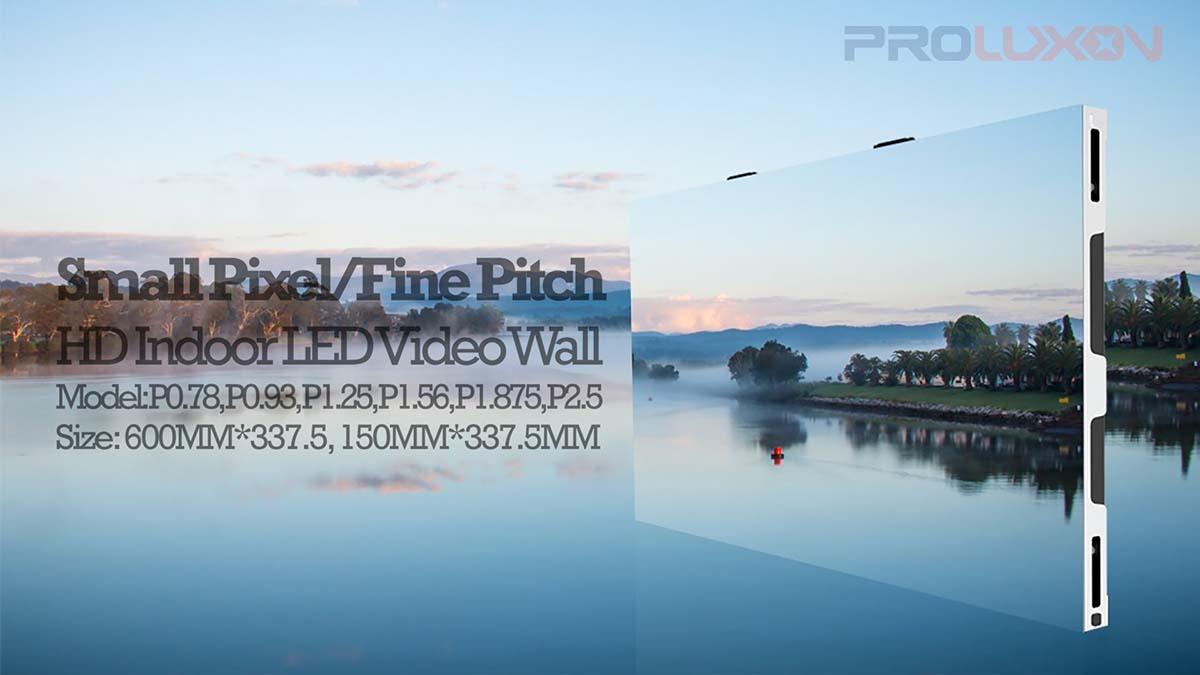
In the third quarter, the shipment area of COB small-pitch LED products witnessed a remarkable year-on-year growth of up to 150%! Industry experts have emphasized that the small-pitch LED market is currently undergoing a "new wave" of development, particularly in terms of high-quality expansion driven by mid-to-high-end products, which solidifies the overall excellence of this phase in the market.
The decrease in prices is driving the expansion of the market.
According to the research report, the pivotal factor driving the rapid expansion of the LED display market remains to be price decline. For example, in the third quarter, the market unit price of small-pitch LED displays in mainland China was 14,200 Yuan/square meter, a 5.3% decrease from the second quarter. This price can be said to be at the "lowest point in market history."
In the second quarter, there was a wave of "significant price increases" observed, encompassing both terminal and upstream brands such as Leyard. However, based on the market's final performance, it appears that more brands are inclined to adopt a wait-and-see approach towards pricing or even proactively engage in price reductions. Notably, Absen and Nationstar Optoelectronics emerged as the primary catalysts behind price cuts during this period.
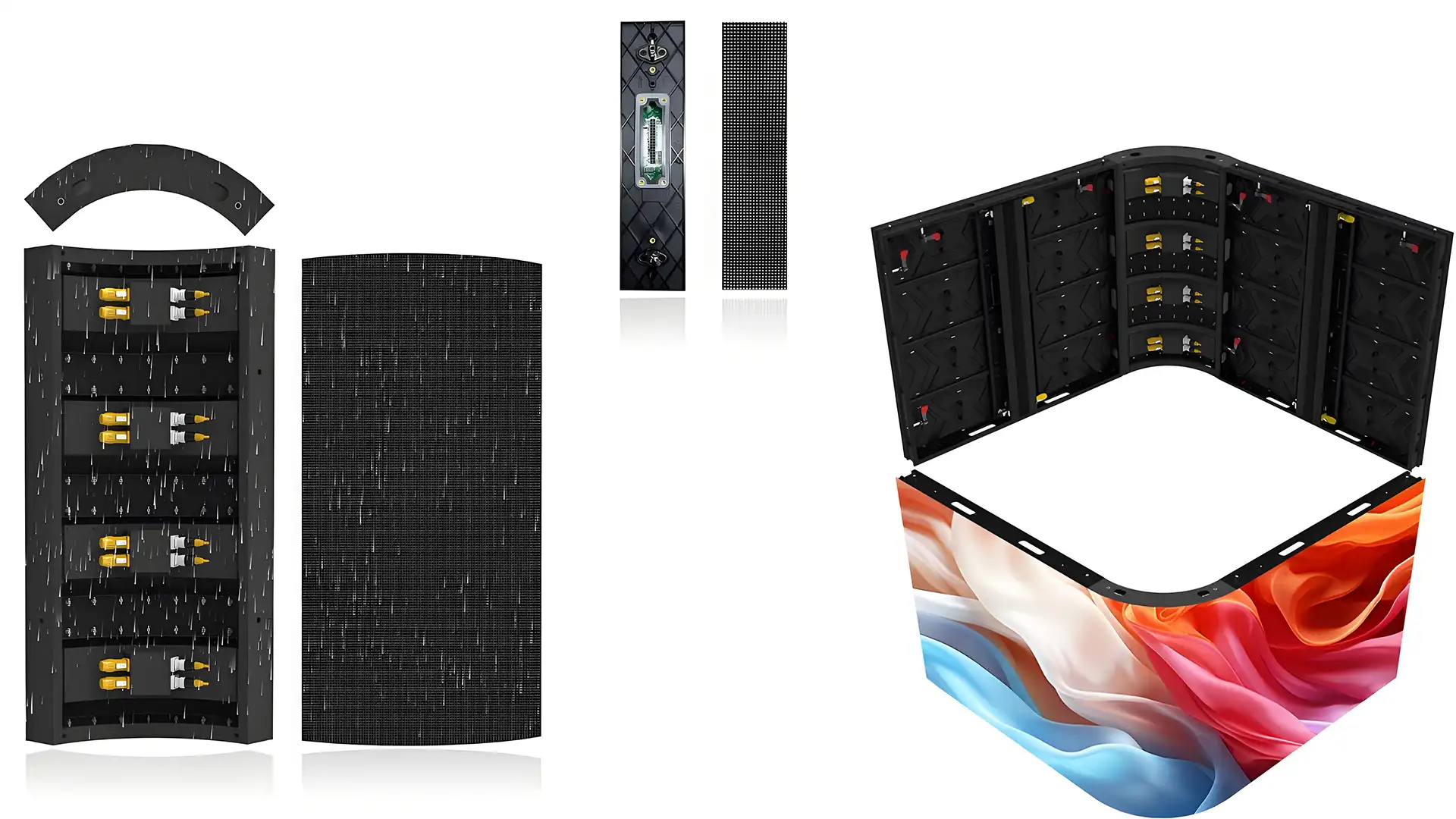
Among them, new technologies have emerged as the primary catalyst for price reduction. For instance, during the first three quarters, the average cost of small-pitch LEDs utilizing COB technology witnessed a decline exceeding 30%. This price drop can be primarily attributed to factors such as enhanced yields, continuous expansion of upstream supply chains, and abundant production capacity in relation to demand. Regarding the accelerated depreciation in prices of high-tech products, analysts posit that it has reversed the previous trend where "surface-mounted technology and relatively resistant technology" led industry-wide price declines - by 2023, "the higher the technological advancement, the greater its potential to drive down prices" will become a key characteristic defining high-quality development within this sector.
Additionally, industry experts have emphasized that the majority of current small-pitch LED product specifications fall short of meeting the comprehensive system cost benchmark of "one hundred square meters and one million prices", meaning they have not yet entered the popular price range. In the long term, continuous efforts to reduce costs remain fundamental and a shared consensus within the industry's expansion.
The process of innovation drives continuous enhancements in consumer consumption.
From the demand perspective, small-pitch LEDs are entering a new era of "quality competition". For instance, according to Luotu data, in Q3, products with spacing specifications of P1.6 and below accounted for 30.1% of the shipment area, representing a YoY increase of 6 percentage points. This implies that the market growth rate for such products is as high as 58%, which is significantly higher than the overall market growth rate of 27%.
Meanwhile, in the third quarter of the small-pitch LED industry, high-end and high-priced products with a pixel pitch of P1.0 and below also achieved a robust year-on-year growth rate of over 35% in terms of shipment area. This increase significantly outpaced the overall market growth capacity.
The increase in small-pitch LED consumption in the third quarter reflects the characteristics of a mid-to-high-end dominant market, indicating a significant decline in market share for mature product lines around P2.0 and a further slowdown in growth rate. The development of the industry market now heavily relies on advanced technology and innovation to lead the trend. Consequently, technologies such as COB technology, MIP technology, and virtual pixel technology that enable "lower prices and better effects" for mid-to-high-end pitch products have gained immense popularity.
In particular, MIP technology is driving a surge in product layout, with the volume of new terminal products surpassing historical totals in the third and fourth quarters. Industry analysts anticipate that supported by COB and mip packaging technologies, the micro LED-level LED direct display market could witness an expansion of over 100% by 2024. A prevailing rule now dictates that newer technologies experience accelerated growth and cost reduction, fostering industry application innovation. Notably, the interaction between technological innovation and application innovation in LED direct display is becoming increasingly resonant.

The industry demand pattern is transformed by the introduction of high-quality applications.
The lower prices of products with smaller pixel pitch provide a solid foundation for quality enhancements in LED direct display applications. The market-oriented performance is exemplified by the increasing demand growth within the "entertainment" industry, positioning it as a new frontrunner.
The third quarter witnessed a rapid surge in the proportion of small-pitch LED direct display market information release application scenarios, as indicated by data from Luotu Technology. This figure increased by 8.2 percentage points compared to the previous quarter, reaching 42.8%. These applications primarily cater to education, showcasing school history and government affairs party history among others. In terms of exhibition applications, small-pitch LEDs have emerged as direct competitors to engineering projectors and are poised to become the dominant single segmented application scenario for small-pitch LEDs in the future.
Empowering light displays! The technological advancements in small-pitch LEDs have significantly enhanced visual effects, offering essential smart display solutions across various industries and gaining customer favor with their superior color reproduction and image quality. As we enter 2023, the first year after the epidemic and a critical period for global economic recovery, demand, technological progress, and cost reduction are forming a positive feedback loop. From a market structure perspective, further development of high-quality small-pitch LEDs will unlock more opportunities for pure commercial applications.
In this aspect, industry insiders have pointed out that the initial command and dispatch center market played a crucial role in driving the growth of high-quality small-pitch LED applications. Currently, conferences and information release scenarios dominate the demand landscape, with reduced costs and enhanced imaging quality of small-pitch LEDs continuously fueling market expansion. Particularly, virtual pixel and MIP packaging technologies, which have gained increasing popularity since 2023, offer dual advantages in terms of cost-effectiveness and image quality. Going forward, the application of small-pitch LED displays will further accelerate by capitalizing on continuous price reductions for higher-quality products and exploring new application scenarios.
The current market trends are centered around "application upgrades" rather than technological advancements.
The decline in prices, emergence of new technologies, and rise of new applications signify that the utilization of small-pitch LEDs is entering a new phase of development and may also witness a peak in market expansion.
The industry's recent development differs from the previous decade, with a primary focus on establishing a "higher technical threshold," generating more "innovative, pioneering technology applications," and capturing unexplored scenarios. Conversely, the current phase of industry growth is evidently characterized by an "elevation in application quality" and the emergence of increasingly popular applications.
The initial innovation involved expanding the scope; whereas the current phase of innovation focuses on enhancing market penetration. This distinction is crucial as it highlights that the industry's new challenges primarily revolve around "how to promote widespread adoption of applications".
Under such an industry backdrop, a battle for market share among enterprises is inevitable. Consequently, even amidst the price increase crisis in the second quarter, numerous companies persisted in refraining from raising prices or even proactively reducing them. This exemplifies the "appreciation of economies of scale" by market participants, particularly terminal brands. Guided by this mindset, future industry development will increasingly prioritize enhancing image quality and delivering higher quality at reduced costs based on current technological levels. Competition will intensify accordingly.
The emerging MIP packaging, as compared to traditional COB packaging, and the virtual pixel technology, as compared to physical pixels, are both innovative solutions that align with the dual objectives of enhanced usability and cost reduction. Consequently, it is evident that the "strategic center" of the entire small-pitch LED direct display industry has undergone a transformation.
To summarize, the third quarter witnessed not only another round of substantial growth in the domestic small-pitch LED market but also significant changes in "consumption structure and incremental driving model," which are indicative of a new era for this industry. By adopting a more pragmatic approach and emphasizing practicality, coupled with innovative solutions and cost efficiency, there is an increasingly evident trend towards promoting a new wave of market expansion primarily driven by high-quality mid-to-high-end products that cater to popular demand.